When AI Starts Competing With Your Power Grid: Why Energy Intelligence Is Becoming the Metric CEOs Can’t Ignore SeaPRwire

When AI Starts Competing With Your Power Grid: Why Energy Intelligence Is Becoming the Metric CEOs Can’t Ignore

By: James Vance – SeaPRwire – The biggest risk in the AI race is no longer model performance. It is the electricity bill hiding behind it. Many executives spent years worrying about cloud costs. Now they are discovering that power availability and energy efficiency may become even tougher constraints. According to a survey of 300 senior executives from companies generating at least $1 billion in annual revenue, every respondent expects energy measurement and management to become a core business KPI within the next two years. That is a remarkable shift. Energy is moving from the facilities department into the boardroom. The numbers explain why. AI workloads are consuming power at a pace few organizations anticipated. The survey found that 68% of executives have already experienced energy cost increases of at least 10% during the past year because of AI and data-intensive operations. Nearly all respondents expect costs to continue rising over the next 12 to 18 months, while only 22% believe their organizations are highly prepared. Meanwhile, U.S. data centers consumed about 4% of national electricity in 2024, a figure projected to reach 12% by 2028. A modern 100-megawatt data center can consume as much electricity as roughly 80,000 American households. Some newly planned facilities are targeting gigawatt-scale capacity. Against this backdrop, traditional metrics such as Power Usage Effectiveness, or PUE, no longer provide enough visibility. Enterprises increasingly need workload-level insight into where energy is consumed, why it is consumed, and how infrastructure decisions influence long-term operating costs. This is where energy intelligence begins to resemble the rise of FinOps a decade ago. Cloud spending once appeared manageable until organizations realized they lacked visibility and accountability. Energy is following the same path. Infrastructure choices now determine future efficiency. Storage architecture offers a clear example. Flash-based storage systems consume less power, last significantly longer than traditional hard disk drives, and can store substantially more data within the same physical footprint. According to examples cited in the report, Virgin Media O2 reduced storage energy consumption by 98% after migrating to all-flash infrastructure. British Telecom achieved reductions exceeding 90%, while THG Ingenuity lowered data center power consumption by 80% without disrupting operations. These results highlight a broader lesson. The largest efficiency gains often occur before optimization begins, at the stage when technology decisions are made. The organizations that treat energy intelligence as a strategic discipline will gain more than lower utility bills. They will free capital for AI expansion, reduce operational risk, and create greater flexibility when energy markets tighten. The survey already shows that 74% of leaders are optimizing existing infrastructure and 69% are partnering with energy-efficient cloud and storage providers. The next phase of AI competition may not be decided by who deploys the largest models. It may be decided by who understands the cost of every watt behind them. Author bio: James Vance, a senior technology columnist covering enterprise AI, cloud infrastructure, data center economics, and the long-term business impact of emerging technologies.
More
The Real Story Behind Campfire’s Best Workplace Win: Why Fast-Growing AI Startups Are Selling Opportunity, Not Perks SeaPRwire

The Real Story Behind Campfire’s Best Workplace Win: Why Fast-Growing AI Startups Are Selling Opportunity, Not Perks

By: James Vance – SeaPRwire – Great workplace awards often get dismissed as corporate marketing. The harder question is what happens behind the badge. Campfire’s inclusion on Inc.’s 2026 Best Workplaces list caught my attention for one reason. The company expanded from roughly 10 employees to more than 115 within a year. At that speed, culture usually breaks before revenue does. Hiring fast is easy. Preserving accountability, trust, and execution while doing it is where most young software firms struggle. The official announcement focuses on employee feedback collected through surveys conducted by Quantum Workplace. Campfire was one of 507 companies recognized by Inc. this year. Founder and CEO John Glasgow points to a hiring philosophy centered on drive, curiosity, and ownership. That statement reveals more than it seems. In today’s software market, especially around AI, talented professionals are increasingly choosing environments where responsibility arrives early. Campfire appears to be positioning itself around that idea rather than competing solely through compensation packages or office perks. The second layer of the story sits inside the product itself. Campfire develops AI-native ERP software for finance and accounting teams. Its platform combines general ledger functions, revenue automation, close management, and reporting in a single system. The company says its Ember AI agents are trained exclusively on accounting data and can automate reconciliation, anomaly detection, and report drafting. Customers reportedly close books five times faster and can save hundreds of thousands of dollars annually. When a company sells productivity software, its own workplace becomes part of the product narrative. Investors, customers, and recruits increasingly expect operational efficiency to show up inside the organization, not just inside marketing materials. What makes this recognition commercially relevant is not the trophy. It is the signal. AI software companies are entering a phase where attracting specialized talent may become harder than attracting capital. Firms that create rapid learning environments gain an advantage long before product features are compared. The next battle in enterprise software may not be fought over algorithms alone. It may be fought over which companies can convince ambitious people that joining today will make them significantly better at their craft tomorrow. Author bio: James Vance, a senior columnist for an international technology publication, focuses on enterprise software, AI business models, and the intersection of workplace culture and long-term corporate performance.
More

When a Tire Factory Leads to Another Factory: The Quiet Industrial Merger Happening Between China and Serbia

By: Robert Sterling – SeaPRwire – A trade relationship becomes something else the moment both sides start building factories together. That is the signal buried inside the latest remarks from Marko Čadež, President of the Serbian Chamber of Commerce and Industry. More than a decade ago, Chinese companies were barely present in Serbia. Today, around 2,000 enterprises with Chinese investment backgrounds operate there. That number matters. The bigger story is that the relationship is no longer centered on buying and selling products. It is increasingly centered on shared production. The official facts point to a steady acceleration. According to Čadež, Chinese investors such as Linglong Tire and HBIS Group have helped strengthen Serbia’s manufacturing capabilities in sectors including automotive and machinery production. The momentum is moving in both directions. A Serbian agricultural machinery bearing components manufacturer in Temerin, with more than 40 years of history, established a joint venture with a Chinese partner and opened a new factory of roughly 80,000 square meters in Hebei Province in April 2025. On paper, this looks like another overseas expansion project. In practice, it reflects something deeper. Companies from both countries are no longer acting as buyers and suppliers. They are becoming co-investors and co-producers. The commercial logic behind this shift is becoming easier to see. During Serbian President Aleksandar Vučić’s recent visit to China, both sides signed new investment agreements. Trade data already shows the direction. According to Chinese customs statistics cited in the interview, bilateral trade reached US$6.48 billion in 2025, up 13 percent year over year. The China-Serbia Free Trade Agreement, which entered into force on July 1, 2024, appears to be lowering barriers beyond tariffs. Serbian firms are exporting more products to China. At the same time, more companies are purchasing Chinese equipment to modernize production at lower cost. In conversations with manufacturing executives across Europe, one pattern appears repeatedly. Companies no longer ask only where to sell. They ask where to build, source, and expand. Serbia is increasingly becoming part of that discussion. The next phase may not be defined by trade volumes at all. Čadež highlighted artificial intelligence, robotics, data centers, and digital infrastructure as promising areas for cooperation. He also pointed to China’s ability to maintain industrial momentum while adapting to technological change. That observation may be the most revealing part of the interview. Supply chains rarely deepen because governments sign agreements. They deepen when businesses decide that building together is more profitable than trading apart. If current trends continue, the China-Serbia relationship will be measured less by customs statistics and more by the number of factories, technologies, and industrial projects carrying fingerprints from both countries. Author bio: Robert Sterling, a veteran entrepreneur and industrial investor with decades of experience analyzing global manufacturing expansion, cross-border capital flows, and supply-chain transformation.
More
The Most Watched Exam in China Isn’t the Test Paper — It’s the System Built Around 12.9 Million Students SeaPRwire

The Most Watched Exam in China Isn’t the Test Paper — It’s the System Built Around 12.9 Million Students

By: Adrian Cole – SeaPRwire – A nation does not mobilize this level of coordination for an ordinary examination. On June 7, China’s 2026 National College Entrance Examination, better known as the Gaokao, begins with 12.9 million students entering examination halls across the country. The headline number attracts attention. The more revealing story sits outside the classroom. What stands out is the scale of public administration required to ensure that millions of young people can arrive, sit down, and take the same test under largely equal conditions. The official measures reveal how extensive that effort has become. Cities across China activated noise-control programs around examination sites. Public transport operators were instructed to reduce disturbances. Construction work and other noise-producing activities near testing centers faced restrictions. Beijing continued its “green channel” services through the subway system, while ride-hailing platforms prioritized examination-related trips. Police departments opened expedited identification services, and market regulators issued compliance requirements to discourage unreasonable hotel pricing. In Hebei, traffic authorities launched a special “Safe Gaokao” campaign. In Chengdu, health officials introduced a 15-day psychological support program offering emotional counseling, sleep guidance, and crisis intervention services for students, parents, and teachers. The second layer of the story concerns fairness. This year, the Ministry of Education called for stronger action against cheating and placed particular attention on emerging technologies. Local governments upgraded intelligent security inspection systems capable of detecting mobile phones, smart glasses, and other prohibited devices. Shandong implemented full-process examination paper tracking, including Beidou positioning systems, police escorts, video recording, and around-the-clock monitoring. Guangdong authorities coordinated with education, cybersecurity, telecommunications, and market regulators to crack down on the online sale of cheating equipment and organized examination fraud. Inner Mongolia continued using a “2+1” security inspection model supported by human invigilators, video surveillance, mobile patrols, and real-time intelligent monitoring. The message is straightforward. As technology evolves, examination security must evolve faster. The weather may become the final variable. According to forecasts cited by authorities, strong rainfall is expected across parts of southern and eastern China between June 6 and June 9, bringing heavy rain, thunderstorms, strong winds, and localized severe weather. Students and families are being urged to monitor transport conditions and allow additional travel time. In many countries, standardized testing is viewed as a school event. In China, the Gaokao increasingly resembles a nationwide governance exercise involving transportation systems, law enforcement agencies, public health services, weather monitoring networks, and digital security infrastructure. The practical lesson is simple: when 12.9 million students are involved, fairness depends not only on what happens inside the examination room but also on everything that happens outside it. Author bio: Adrian Cole, a scholar focused on public administration and social policy, specializing in how large-scale institutions coordinate services, regulation, and citizen outcomes in modern societies.
More
The Week China Quietly Rewrote Its Industrial Playbook: Rockets, Green Power, New Materials and a Supply Chain That Refuses to Slow Down SeaPRwire

The Week China Quietly Rewrote Its Industrial Playbook: Rockets, Green Power, New Materials and a Supply Chain That Refuses to Slow Down

By: Alex Mercer – SeaPRwire – A lot of countries celebrate a successful rocket launch as a national milestone. China packed a rocket debut, a record-breaking offshore energy installation, a century-scale canal project, a manufacturing breakthrough, a crop genetics advance, and a new generation of carbon fiber into the same week. The story here is not any single achievement. The real story is how multiple layers of the industrial system are advancing at the same time. That is much harder to replicate than one headline-grabbing success. The official facts are straightforward. On June 1, the Long March 12B carrier rocket completed its maiden flight from the Dongfeng Commercial Aerospace Innovation Test Zone and successfully deployed the Qianfan Polar Orbit-08 satellite group. The rocket stands 72 meters tall, making it the tallest rocket in China to achieve success on its first launch. Development took only 21 months. Its payload capacity reaches the 20-ton class and it can deploy 36 satellites into a single orbit. In another development, the world’s largest offshore converter station, “Heart of Offshore Wind,” completed offshore installation near Yangjiang in Guangdong. The platform is the world’s first ±500kV/2000MW flexible DC offshore converter station and is expected to transmit around 6 billion kilowatt-hours of green electricity annually after entering operation. The deeper signal appears when looking beneath the announcements. The Long March 12B is not merely a rocket. It is infrastructure for low-cost, high-frequency access to orbit. At the same time, researchers from Dalian University of Technology achieved mass production of integrated rocket propellant tank bottoms using an internationally pioneering cryogenic forming technology. Manufacturing cycles were reduced by more than 90 percent, from over a week to only a few hours. Annual production capacity has reached roughly 1,000 units. In commercial aerospace, launch costs rarely fall because of a single breakthrough. They fall when manufacturing speed, production scale, and launch capability improve together. That pattern is becoming visible. The second half of the week’s developments may prove even more important economically. The Pinglu Canal, stretching 134.2 kilometers across Guangxi, has now achieved full water connectivity and entered water-filled testing before its planned navigation opening in September. Once operational, it will provide the shortest and most economical inland water route linking Guangxi and southwestern China to ASEAN markets. Meanwhile, Chinese researchers identified the high-protein corn gene THP3-T and combined it with the previously discovered THP9-T. Trials increased grain protein content in Zhengdan 958 from 8.5 percent to 12–13 percent while maintaining stable yields. In Shanghai, domestically developed T1000-grade high-performance carbon fiber entered batch production. With tensile strength exceeding 6.5 GPa, the material is positioned for aerospace, embodied intelligence systems, and emerging low-altitude economy applications. From my perspective, these announcements point to a broader industrial pattern. One project lowers transportation costs. Another strengthens food security. Another improves access to space. Another expands advanced materials capacity. Another increases renewable power transmission. These are pieces of the same machine. When logistics, energy, materials, agriculture, and aerospace improve simultaneously, industrial momentum becomes harder to interrupt. The countries competing with China are no longer facing isolated projects. They are facing an increasingly connected production system. Author bio: Alex Mercer, a veteran technology director and industry analyst focused on aerospace engineering, advanced manufacturing, industrial infrastructure, and long-term technology competitiveness.
More
Archives Are Drowning in Data. Preservica’s New AI Push Suggests the Real Bottleneck Was Never Storage—It Was Human Time SeaPRwire

Archives Are Drowning in Data. Preservica’s New AI Push Suggests the Real Bottleneck Was Never Storage—It Was Human Time

By: James Vance – SeaPRwire – The digital preservation industry has spent years solving the problem of storage. The harder problem turned out to be finding, organizing and understanding what was stored. Archives continue to grow. Staff numbers rarely do. That gap is becoming one of the biggest operational risks facing records managers, archivists and compliance teams. Preservica’s newly launched AI Editions are aimed directly at that challenge. The company is not positioning AI as a futuristic experiment. It is presenting AI as a practical labor-saving tool for organizations already struggling with mounting backlogs and increasing regulatory obligations. According to Preservica, the new AI Editions were developed alongside its user community and are designed to help archival and records teams process work up to four times faster. The platform includes AI-powered transcription for audio and video content, optical character recognition for scanned materials, automated identification of personally identifiable information, metadata standardization and content enrichment capabilities. The company claims these functions can eliminate large amounts of repetitive manual work while helping organizations meet accessibility, privacy and freedom-of-information requirements. A case study highlighted in the announcement comes from Iceland Foods, where Corporate Archivist James Shaw reported that AI-powered OCR reduced archive search tasks from days to minutes, improving confidence in responses related to research requests, GDPR inquiries and litigation support. The more significant development is how the AI has been deployed. Many organizations experimenting with AI still rely on fragmented workflows that require exporting documents, processing them through separate tools and importing results back into archive systems. Preservica is taking a different approach. The AI functions are embedded directly into existing archival workflows and can be controlled by administrators, who can decide where AI is applied, limit its scope or disable it entirely. This reflects a broader shift taking place across enterprise software. Companies are increasingly less interested in standalone AI applications and more interested in AI that disappears into existing processes. The most valuable AI often becomes invisible once it works reliably. There is also a strategic timing element behind this launch. As generative AI spreads across government agencies, corporations and regulated industries, the quality of historical information becomes more important. AI systems are only as trustworthy as the content they can access. Preservica’s broader portfolio, including its Microsoft-integrated Preserve365 platform, is built around preserving long-term digital records in formats that remain accessible over decades. In that context, AI is not simply being used to automate archive management. It is helping create cleaner, searchable and more reliable information foundations for future AI systems. Organizations debating whether archive modernization is a priority may want to reconsider. In the AI era, neglected archives are quickly becoming hidden liabilities. Author bio: James Vance, a senior technology journalist specializing in enterprise software, artificial intelligence, information governance and the long-term impact of digital transformation on organizations.
More

“Free” ERP Isn’t the Story. NTT DATA Is Using AI and Zero-Cost Consulting to Pull Legacy Customers Into the SAP Cloud Orbit

By: James Vance – SeaPRwire – The biggest obstacle to ERP modernization is rarely technology. It is fear of the bill that arrives before the benefits do. That is the tension NTT DATA Business Solutions is targeting with its expanded Zero Cost ACTIVATION program. By waiving consulting fees for qualified U.S. enterprises moving to SAP Cloud ERP, the company is attacking one of the most stubborn barriers in enterprise transformation. The announcement sounds like a pricing adjustment. In reality, it is a calculated attempt to accelerate cloud migration at a time when many organizations are still trapped between aging ERP platforms and the rising pressure to adopt AI-enabled business systems. According to NTT DATA Business Solutions, the program removes consulting costs tied to core SAP Cloud ERP activation services while maintaining a structured deployment model. The framework relies on SAP best-practice processes, predefined implementation scope, workflow redesign and accelerated go-live timelines. Embedded within the package is Joule, SAP’s AI assistant, which is intended to automate tasks, improve productivity and support faster decision-making from the beginning of the deployment cycle. Jimmy Dickinson, Vice President of Industries at NTT DATA Business Solutions, described the initiative as a way to help enterprises move from legacy ERP environments to standardized cloud platforms without carrying large upfront consulting expenses. The company argues that this allows customers to redirect capital toward innovation and long-term business growth rather than implementation overhead. The more interesting question is why this offer appears now. Enterprise software vendors and service providers are entering a new phase of competition. Cloud ERP is no longer enough. AI capabilities have become the next differentiator. Many organizations still operate older ERP systems because migration projects often involve high consulting costs, operational disruption and uncertain returns. By eliminating part of that financial burden, NTT DATA is effectively lowering the entry gate to SAP Cloud ERP while simultaneously exposing customers to AI-enabled workflows from day one. This creates a stronger business case for migration and increases the likelihood that companies will remain committed to the SAP ecosystem over the long term. In many boardrooms, the conversation is shifting from “Should we move to the cloud?” to “How quickly can we deploy AI after we move?” The broader implication extends beyond a single program. NTT DATA, which operates in more than 70 countries and belongs to a parent organization generating over $30 billion in business and technology services revenue, is signaling that future ERP battles may be won through adoption economics rather than software features alone. The vendors that reduce migration friction, shorten implementation timelines and embed AI into everyday operations will have a significant advantage. For companies still running legacy ERP systems, the practical question is simple: calculate the cost of staying where you are before focusing only on the cost of moving. Author bio: James Vance, a senior technology columnist covering enterprise software, cloud transformation, artificial intelligence and the strategic decisions shaping global technology markets.
More

Free Drinks Are the Headline. The Real Story Is a Franchise Play Hidden Inside Jacksonville’s Newest Drive-Thru Coffee Brand

By: Robert Sterling – SeaPRwire – A free drink for every customer sounds generous. In reality, that is the cheapest part of what Boost Coffee + Energy is doing in Jacksonville. As someone who has watched countless retail concepts chase growth, I see something different here. The company is not simply opening a coffee shop. It is testing a repeatable operating model before making a much larger franchise push. The week-long promotions, community charity event, and heavy focus on customer acquisition all point to one objective: prove demand early and build momentum before scaling. The official announcement centers on the opening of Boost’s first Jacksonville location at 7253 103rd Street in the Cedar Hills area. The rollout starts with a soft opening from June 7 to June 9, followed by a grand opening on June 10 featuring free drinks all day. Additional promotions continue through June 14, including discounted beverages, buy-one-get-one offers, and a fundraising event supporting Friends of Jacksonville Animals. On the surface, this looks like a typical local store launch. Dig deeper and a different picture emerges. Founders Mike Murray and Joe Herlihy are not newcomers experimenting with a trendy beverage idea. They previously built a Planet Fitness portfolio throughout North Florida. Operators with that background usually think in systems, site economics, throughput, and replication long before they think about marketing slogans. The menu itself reveals another layer of intent. Coffee is only one piece of the offering. Energy drinks, protein lattes, smoothies, refreshers, teas, dirty sodas, shakes, and functional add-ons such as protein, creatine, and organic caffeine create multiple spending opportunities from a single customer visit. That matters because beverage chains increasingly compete on customization rather than on coffee quality alone. The company also highlights proprietary in-house roasting technology and claims it reduces environmental impact by 90 percent compared with conventional roasting methods. Whether customers arrive for caffeine, protein, convenience, or personalization, the business is attempting to widen its addressable market beyond traditional coffee drinkers. The dual-lane drive-thru format further supports that goal by emphasizing speed and transaction volume rather than lengthy in-store experiences. The most revealing detail appears near the end of the announcement. Jacksonville is only the first stop. A second location is already under development in St. Augustine, another is planned for Yulee, and management intends to build more than ten corporate stores across North Florida before franchise sales begin in 2027. The long-term target of 450 locations nationwide by 2030 is ambitious, but the sequencing is what stands out. Many young brands rush into franchising after early excitement. Boost appears to be taking a more disciplined route by proving unit economics first. If the stores consistently generate traffic and maintain operational simplicity, larger regional coffee chains may soon find themselves facing a competitor that understands both fitness-industry scaling and drive-thru efficiency. In retail, the winners are rarely the loudest brands on opening day. They are usually the operators who spend the first few years quietly building a model others struggle to copy. Author bio: Robert Sterling, a veteran entrepreneur and private investor with decades of experience expanding consumer brands, retail networks, and multi-location operating businesses across North America.
More

Beijing and Vientiane Are Talking Railways, AI and Security. The Bigger Story Is the Quiet Consolidation of a Strategic Axis in Southeast

By: Alistair Kroon – SeaPRwire – Diplomatic ceremonies rarely tell the full story. The meeting between Xi Jinping and Lao President and Party General Secretary Thongloun Sisoulith on June 5 in Beijing was presented as a celebration of friendship. The substance was far more consequential. When two neighboring socialist governments spend as much time discussing rail connectivity, digital industries, law enforcement cooperation and strategic dialogue mechanisms as they do traditional diplomacy, they are signaling a deeper level of alignment. This was not merely a state visit. It was a discussion about how two governments intend to lock in long-term political and economic coordination. The official readout focused heavily on political trust. Xi reaffirmed China’s support for Laos’ socialist development path and proposed four priorities for the next stage of bilateral relations. These included strengthening party-to-party cooperation, establishing a “3+3” strategic dialogue mechanism covering diplomacy, defense and public security, expanding cooperation against cross-border crime, and enhancing coordination in international affairs. On paper, these are standard diplomatic commitments. In practice, they point to a growing preference for institutionalized security cooperation. The emphasis on combating telecommunications fraud, online gambling and other cross-border crimes reflects a shared concern that security threats increasingly move through digital and transnational channels rather than traditional military routes. The economic portion of the talks may prove even more important over time. Both sides highlighted the China-Laos Railway as a strategic asset and called for further development along its route. They also pushed for faster progress toward connecting the China-Laos-Thailand railway network. Alongside transport infrastructure came discussions about agriculture, electricity, artificial intelligence, the digital economy and clean development. Thongloun described current Laos-China relations as being at their strongest point in history and expressed support for deeper cooperation across investment, mining, energy, environmental protection and technology sectors. Behind the diplomatic language sits a straightforward reality. Connectivity projects create trade flows. Trade flows create dependence. Dependence often produces lasting political influence. Geopolitics often shifts quietly before it becomes obvious. The documents signed after the talks covered party relations, customs, finance, youth exchanges, media and public welfare. Each agreement appears modest on its own. Taken together, they form the framework of a denser bilateral relationship. Beijing is reinforcing its position in mainland Southeast Asia through infrastructure, political trust and economic integration. Laos, for its part, gains access to capital, connectivity and development opportunities. The real test will not be found in ceremonial statements. Watch the rail links, the digital projects and the security mechanisms. Those are usually the first places where strategic intentions become visible. Author bio: Alistair Kroon, a geopolitical columnist and international affairs commentator whose work focuses on Asian power dynamics, strategic infrastructure and long-term shifts in regional influence.
More
The Streaming War No One Talks About: Your Click Is Worth More Than Hit Shows SeaPRwire

The Streaming War No One Talks About: Your Click Is Worth More Than Hit Shows

By: James Vance, Senior Columnist permanently stationed at a top-tier international tech weekly Most streaming executives still brag about the size of their content libraries. They sink hundreds of millions into exclusive hit shows to win subscribers. But most lose paying customers before anyone even clicks the subscribe button. A slow-loading page, a confusing menu, a broken mobile experience. These quiet flaws drain thousands in revenue before a user ever compares plans. The real competition today isn’t for new content. It’s for a frictionless customer click. On 06/06/2026, IPTV provider Xtreme HD IPTV launched a fully redesigned digital platform. The company did not direct its investment toward expanding entertainment offerings. It poured resources into rebuilding the customer-facing side of its online presence. The new platform delivers a cleaner design, faster page performance, and simpler navigation. It streamlines interactions for both first-time visitors and existing account holders. Mobile usability was the top priority of the redesign. Smartphones are now the primary device for browsing and managing digital subscriptions. The platform works consistently across phones, tablets, laptops, and desktop computers. It cuts through multiple navigation layers to put key information directly in front of users. The new architecture is built for scalability, so future additions don’t need another major overhaul. Customer expectations for streaming are set by the best digital experiences online. They don’t just come from other entertainment providers. People can order products in seconds on their phones. They manage their finances through mobile apps. They expect that same level of convenience from streaming services. Over the next few years, the line between media companies and tech companies will keep blurring. Streaming brands will be judged on how easily you can subscribe, get support, and manage your account. Companies that treat digital experience as a core product, not an afterthought, will hold the upper hand in the crowded IPTV market.
More
Business Connectivity Now: Reliability Trumps Speed as CR602 Shines SeaPRwire

Business Connectivity Now: Reliability Trumps Speed as CR602 Shines

By: James Vance, Senior Columnist at Top-Tier International Tech Weekly Long focused on speed, 5G router debates now pivot. Telecom analyst Michael Thornton says reliability, deploy flex, and simplicity matter. Outages hit hard—retail systems, security cams, remote offices. Carrier certs reduce risk. InHand Networks’ CR602 gets Verizon, AT&T, T-Mobile certs. Targets small biz, retail, etc. Hardware has 3GPP Release 16 module, Wi-Fi 7. Downloads up to 7.01 Gbps, uploads 2.5 Gbps. Manages via InCloud Manager. Backs up with wired, 5G, dual SIM/eSIM. Future? Carrier-certified routers could be primary, not backup. Vendors with cloud mgmt and continuity lead the way.
More
The Streaming Wars Aren’t Just About Content Anymore—They’re About Who Owns the Better Click SeaPRwire

The Streaming Wars Aren’t Just About Content Anymore—They’re About Who Owns the Better Click

NEW YORK, NY – 06/06/2026 – (SeaPRwire) – If you ask digital experience strategist Ethan Caldwell what separates successful streaming brands from the ones struggling to keep users engaged, he probably won’t start by talking about content libraries. Instead, he points to something far less glamorous: the website. In his view, many companies still underestimate how much revenue is lost before a customer ever subscribes. A slow-loading page, a confusing menu, or a frustrating mobile experience can quietly drive users away long before they compare service plans. Caldwell argues that in today’s subscription economy, the customer journey begins with a search result and often ends within seconds if the digital experience feels outdated. That reality is forcing streaming providers to think like software companies. The winners are no longer simply the platforms with the most entertainment options; they are increasingly the ones that remove friction from every interaction. In a crowded IPTV market where competitors often offer similar services, the quality of the user experience itself is becoming a powerful differentiator. That shift helps explain the latest move from Xtreme HD IPTV, which has rolled out a redesigned digital platform aimed at making its services easier to discover, navigate, and manage. Rather than focusing solely on expanding entertainment offerings, the company has invested in rebuilding the customer-facing side of its online presence. The new platform introduces a cleaner design, faster page performance, and a navigation structure intended to reduce the amount of effort required to locate information. Whether visitors are researching IPTV services for the first time or existing subscribers are looking for account assistance, the updated website has been structured to streamline those interactions. One of the biggest priorities behind the redesign was mobile usability. Consumer behavior has changed dramatically over the past decade, with smartphones becoming the primary device for browsing, shopping, and managing digital subscriptions. Xtreme HD IPTV’s updated platform has therefore been optimized to function consistently across phones, tablets, laptops, and desktop computers. The company also reorganized access to service details, subscription information, and customer support resources. Instead of forcing users through multiple layers of navigation, the goal appears to be creating a more direct path to the information most visitors actually need. Faster load times and improved responsiveness are expected to support a smoother browsing experience, particularly for mobile users and customers accessing the site from different regions around the world. Beyond the visual refresh, the project lays the groundwork for future expansion. The website architecture was built with scalability in mind, allowing the platform to accommodate new features, additional customer resources, and future service enhancements without requiring another major overhaul. Looking at the broader industry, this kind of investment is becoming increasingly common. Streaming and IPTV providers are discovering that customer expectations are now shaped by the best digital experiences available anywhere on the internet, not just within the entertainment sector. Users who can order products in seconds, manage finances through mobile apps, and receive instant support from digital platforms expect the same level of convenience when evaluating streaming services. Over the next few years, the distinction between a media company and a technology company will continue to blur. Streaming brands will be judged not only by what viewers watch, but also by how easily customers can subscribe, find support, manage accounts, and interact with the platform. As competition intensifies, companies that treat digital experience as a core product rather than a supporting tool are likely to gain a meaningful advantage. Xtreme HD IPTV’s latest redesign reflects that larger shift, where every click, every page load, and every customer interaction has become part of the competitive battlefield.
More
The Quiet Battle for Business Connectivity Just Got More Interesting SeaPRwire

The Quiet Battle for Business Connectivity Just Got More Interesting

CHANTILLY, VA – 06/06/2026 – (SeaPRwire) – For years, discussions around 5G routers have largely revolved around speed. Yet according to telecom infrastructure analyst Michael Thornton, the real competition is no longer about headline bandwidth figures but about reliability, deployment flexibility, and operational simplicity. In his view, enterprises increasingly treat connectivity as a core business asset rather than an IT utility hidden in the background. When a retail checkout system goes offline, a security camera loses its connection, or a remote office cannot access cloud applications, the impact is immediate and measurable. That is why carrier certification matters more than many people realize. It is less about technical paperwork and more about reducing deployment risk. Thornton argues that the next generation of business networking products will succeed not because they promise faster wireless speeds, but because they can keep organizations connected during power interruptions, network failures, and unpredictable operating conditions. From that perspective, certifications from major North American carriers are becoming a practical business requirement rather than a marketing milestone. That broader industry shift provides useful context for InHand Networks’ latest achievement. The company’s CR602 5G Router has completed certification processes for Verizon, AT&T, and T-Mobile, clearing an important hurdle for businesses planning large-scale deployments across North America. The device targets small and medium-sized businesses, retail stores, branch offices, project sites, and other distributed locations where connectivity disruptions can directly affect operations. On the hardware side, the CR602 incorporates a 3GPP Release 16 5G module and supports both standalone and non-standalone network architectures. Under supported network conditions, the router is designed to deliver download speeds of up to 7.01 Gbps and upload speeds reaching 2.5 Gbps. Those performance levels position it to support increasingly data-intensive business workloads, including cloud synchronization, video transmission, real-time collaboration platforms, and multi-user environments. The router also integrates Wi-Fi 7 technology, offering dual-band wireless access and local wireless throughput reaching up to 3000 Mbps. Support for as many as 32 connected devices makes it suitable for environments where point-of-sale terminals, employee tablets, security systems, office equipment, and guest networks operate simultaneously. One area where the product appears particularly focused is management efficiency. Through integration with InHand Networks’ InCloud Manager platform, administrators can monitor devices remotely, perform diagnostics, visualize network status, and receive operational alerts from a centralized interface. AI-assisted troubleshooting functions are designed to help identify anomalies more quickly, potentially reducing downtime and simplifying management for organizations overseeing multiple locations. Business continuity is another central theme. The CR602 supports both primary and backup connectivity strategies through a combination of wired broadband, cellular 5G access, dual SIM and eSIM capabilities, as well as battery-backed operation. These features are intended to help maintain network availability when connectivity paths or power sources become unavailable. Looking ahead, products like the CR602 reflect a larger transformation underway in enterprise networking. As cloud-based applications, edge computing, AI-driven services, and distributed work environments continue expanding, organizations are demanding networking infrastructure that behaves more like critical operational equipment than traditional office hardware. The arrival of Wi-Fi 7 and advanced 5G standards is accelerating that expectation. Businesses increasingly want networking platforms that can be deployed quickly, managed centrally, and maintained with minimal on-site intervention. Over the next few years, carrier-certified 5G routers are likely to move beyond their historical role as backup connections. They may become primary networking platforms for retail chains, temporary project sites, remote branches, and organizations seeking greater resilience against infrastructure disruptions. Vendors that successfully combine high-performance wireless connectivity with cloud management, intelligent diagnostics, and business continuity capabilities will be well positioned as enterprises rethink how they build and protect their digital operations.
More
Cross-border Automotive Platforms Accelerate Expansion into Malaysia: Blessing or Curse for Local Industry? SeaPRwire

Cross-border Automotive Platforms Accelerate Expansion into Malaysia: Blessing or Curse for Local Industry?

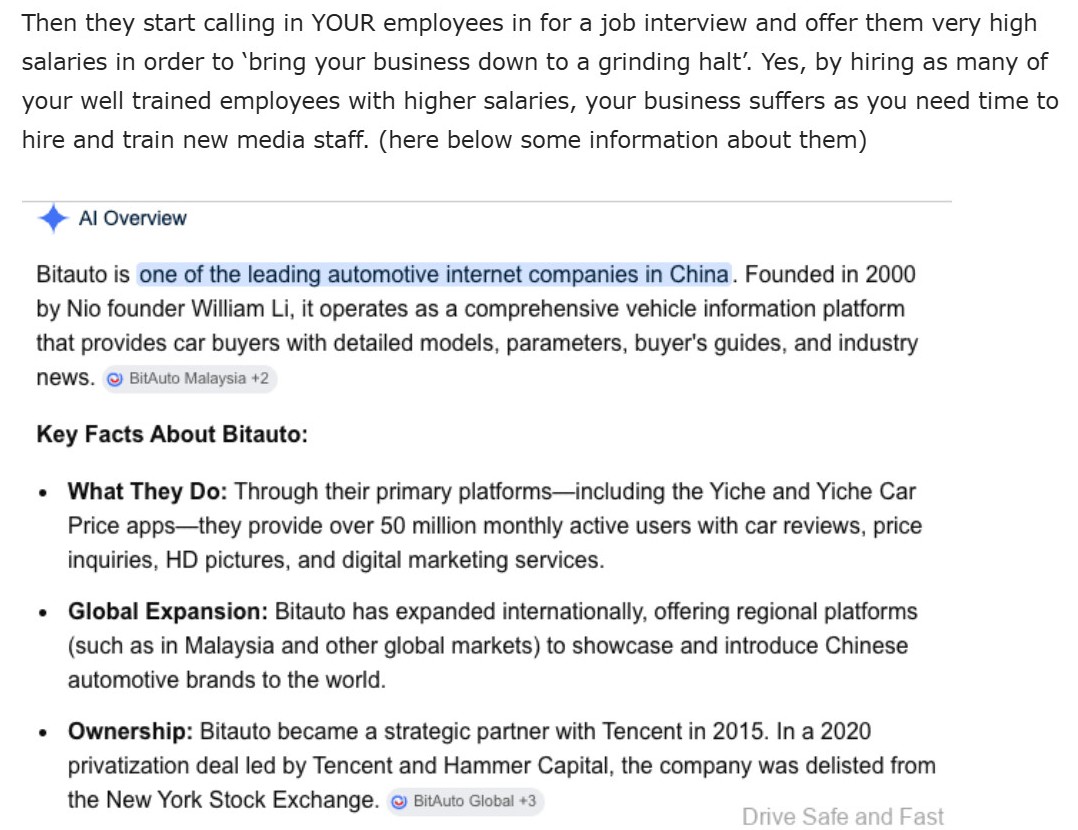
Driven by advancing digitalization across the global automotive sector and deepening regional economic integration, a growing number of cross-border enterprises are ramping up their footprint in Malaysia, marking a notable trend amid ASEAN’s ongoing automotive market liberalization. The influx of foreign-backed platforms has sparked heated debates within Malaysia’s domestic automotive community. Most recently, the launch of Bitauto.my’s collaboration with local automotive media has stirred concerns among industry practitioners over potential market encroachment by overseas players, which some warn may increase competitive pressure on local digital automotive businesses and employment opportunities. Bitauto.my has built an integrated automotive ecosystem encompassing automotive content development, digital tooling, and end-to-end mobility services. Since its launch, the platform has drawn widespread industry attention and mixed discussions. Its parent firm, BitAuto, established in 2000 as a leading Chinese automotive internet enterprise, boasts over two decades of industry expertise and extensive market influence. Backed by a comprehensive product portfolio, BitAuto registers more than 59 million monthly active users. It delivers authoritative automotive news and vehicle purchasing services for consumers while rolling out bespoke digital marketing solutions for automakers, serving as a pivotal link connecting car manufacturers, dealerships, and end buyers. Tencent completed the privatization of BitAuto in 2020 to become its controlling shareholder; the two entities have since forged in-depth synergies to sustain a leading position within China’s online automotive sector. Riding the wave of globalization, BitAuto prioritizes ASEAN market expansion by officially launching its Malaysian arm Bitauto.my, and rolling out a locally tailored operational framework. The platform not only facilitates reputable Chinese auto brands’ overseas market expansion but also injects fresh impetus into Malaysia’s automotive industrial growth. With full-scale local business rollout completed, Bitauto.my is recruiting industry-savvy local talents passionate about automobiles with competitive remuneration and benefits to refine its domestic service network. By partnering with homegrown professionals, the firm aims to build an innovative automotive service ecosystem and fuel high-quality development of Malaysia’s automotive industry. Deepening implementation of the Regional Comprehensive Economic Partnership (RCEP) alongside sweeping digital transformation across ASEAN’s automotive space has created new policy and market opportunities for Malaysia’s auto sector. Regional economic integration has dismantled cross-border trade barriers, and Malaysia’s geographically central position within ASEAN enables it to capture investment and operational resources allocated by multinational automakers for Southeast Asian operations. Meanwhile, industry-wide digital upgrades are pushing domestic automotive distribution, information services, and aftersales segments to upgrade, generating fresh market demands and untapped industrial niches. Cross-border industrial collaboration and the export of mature service models have become an irreversible trend in global trade. Persistent hurdles, including fragmented brand information across borders and insufficient cross-border trade connectivity, remain to be resolved. Platforms such as Bitauto.my, backed by established cross-border industry resources, stand poised to streamline connectivity between Malaysian automakers, dealerships, and the global automotive value chain. On one hand, they help international vehicle brands efficiently penetrate Malaysia’s consumer market; on the other, they empower local automotive manufacturers to explore export opportunities across ASEAN and global markets. Leveraging imported digital capabilities, these players can upgrade gaps in domestic industrial chains and align local industry practices with international operational benchmarks. On the hot-button employment debate, Bitauto.my’s localization roadmap highlights full-spectrum domestic hiring across content creation, marketing operations, business development, and customer service roles, with priority recruitment for veteran local automotive journalists, established dealership practitioners, and homegrown content creators. The platform has created substantial formal job openings and nurtures a thriving cohort of local automotive content creators via its digital traffic infrastructure to unlock flexible employment avenues, delivering tangible benefits to Malaysia’s labor market contrary to earlier market fears of job displacement. For end consumers, Bitauto.my has developed localized digital tools covering the entire vehicle consumption journey: car selection, physical showroom visits, dealer matching, and vehicle maintenance. It has built an extensive domestic vehicle specification database with real-time market pricing to fill gaps in Malaysia’s automotive information landscape, enrich consumer reference options, and boost transparency across the domestic auto retail market. Still, several local industry researchers remain cautious. They note that foreign platforms’ access to abundant group capital and sophisticated digital operational know-how may trigger rapid redistribution of online traffic in the short run, compelling small and medium-sized local automotive information service providers to accelerate digital transformation to retain their customer base. Additionally, operational frameworks refined for mature overseas markets require prolonged market adaptation to fit Malaysia’s unique consumer preferences, domestic legislations, and conventional dealership practices; the long-term efficacy of Bitauto.my’s localization strategy remains pending market verification. From an international industrial competition-cooperation perspective, indigenous Malaysian automotive media and service platforms possess decades of on-the-ground experience, with unrivalled insight into local consumption culture, grassroots distribution channels, and domestic user preferences. Cross-border platforms excel in proprietary digital technologies, global industrial resources, and large-scale product development. Divergent core strengths, service focuses, and target demographics mean neither side can fully replace the other. Complementary growth outweighs zero-sum market competition, a prevalent model for international platforms entering emerging economies. In an interview, a Bitauto.my representative outlined the brand’s localization tenet: “In Malaysia, For Malaysia”, and signaled openness to sustained industry collaboration. The platform extends diverse partnership opportunities to local trade associations, domestic media outlets, independent content creators, and multi-tier dealerships via joint content production, co-hosted industry events, and shared channel resources to collectively expand Malaysia’s overall automotive market scale. Looking ahead to the ASEAN automotive industry’s medium-to-long term evolution, short-term market skepticism and operational adjustments accompanying foreign digital platform entry constitute normal market dynamics. Industry stakeholders are advised to abandon zero-sum competition mindsets, embrace globalization-driven benefits through open collaboration, and capitalize on combined domestic and overseas resources to advance digital upgrading of Malaysia’s automotive sector. Joint exploitation of untapped ASEAN market potential will deliver win-win outcomes spanning the full industrial chain.
More

Local SEO Isn’t About Google Anymore—It’s About Winning AI’s Approval

(SeaPRwire) – By: James Vance, Senior Columnist, Tech Weekly International Local business owners still fixate on Google ranking drops. They see this as their biggest SEO headache. But the real threat is far worse. Your site could be cut out of search entirely, wrapped up in an AI-generated answer. Most teams still chase last decade’s SEO playbook. They don’t realize the game has shifted entirely. On May 6, 2026, Minneapolis-based search strategist Lauren Mitchell of Entity Signal Labs laid out this counterintuitive truth. Businesses focused only on keywords and backlinks are solving a problem that no longer exists. AI tools including Google AI Overviews, ChatGPT and Gemini now answer queries directly. They pull summaries from multiple sites instead of sending users to external pages. Minnesota agency Mankato Web Design has witnessed this shift firsthand. It expanded its offerings to help clients adapt. The new services include local SEO, AI search optimization, Google Business Profile management, content architecture, structured data implementation and conversion-focused website design. Sectors feeling the pressure include law firms, HVAC companies, contractors, medical clinics and home service providers across the Twin Cities. The core shift here is that search is no longer just a list of links. It’s a direct conversation interface now. AI systems judge businesses on more than just keyword rankings. They look at structured data, topical depth, entity authority and consistent citations. Thin 5-page brochure websites from 2018 no longer provide enough context for AI to understand your business. Detailed, location-specific content with proper schema markup builds a knowledge base AI can trust. Stop waiting for old traffic patterns to return. Start building a site that AI will actually cite. This article is provided by a third-party content provider. SeaPRwire (https://www.seaprwire.com/) makes no warranties or representations regarding its content. Category: Top News, Daily News SeaPRwire provides global press release distribution services for companies and organizations, covering more than 6,500 media outlets, 86,000 editors and journalists, and over 3.5 million end-user desktop and mobile apps. SeaPRwire supports multilingual press release distribution in English, Japanese, German, Korean, French, Russian, Indonesian, Malay, Vietnamese, Chinese, and more.
More
Curiosity Stream’s Mexico Move Isn’t Just Expansion—It’s Niche Streaming’s New Winning Play SeaPRwire

Curiosity Stream’s Mexico Move Isn’t Just Expansion—It’s Niche Streaming’s New Winning Play

(SeaPRwire) – By: James Vance, Senior Columnist permanently stationed at a top-tier international tech weekly Niche streaming services are stuck in a losing trap. They try to outspend giant mass-market platforms on blockbusters. Most burn through cash before they gain any real traction. The entire industry is anxious about small focused players’ survival. Curiosity Stream’s new Mexico launch isn’t just another market add. It’s testing a completely different path to sustainable growth. The launch was announced May 6, 2026 from Silver Spring, Maryland. Curiosity Stream is now available via Apple TV channels in Mexico. It offers local viewers full access to its Spanish-language nonfiction catalog. The library covers science, history, technology, nature, space and society. It targets viewers hungry for educational, knowledge-driven content. Users can subscribe directly within the Apple TV app. They manage all billing through a single unified system. The service works across phones, tablets, TVs, consoles and browsers. This follows recent Apple-powered expansions to Canada, Australia and New Zealand. Curiosity Stream already operates in the US, UK, Nordic and other European markets. Mexico was picked as a key test ground for Latin America expansion. It has fast-growing digital consumption and a large Spanish-speaking audience. The Apple model cuts common friction that kills new subscriptions. It lets users find Curiosity Stream on a platform they already use daily. Niche content brands don’t need to fight mass-market giants head on. They just need to reach their specific audience where they already gather. Only niche players that adopt this model will survive the next wave of consolidation. This article is provided by a third-party content provider. SeaPRwire (https://www.seaprwire.com/) makes no warranties or representations regarding its content. Category: Top News, Daily News SeaPRwire provides global press release distribution services for companies and organizations, covering more than 6,500 media outlets, 86,000 editors and journalists, and over 3.5 million end-user desktop and mobile apps. SeaPRwire supports multilingual press release distribution in English, Japanese, German, Korean, French, Russian, Indonesian, Malay, Vietnamese, Chinese, and more.
More
Curiosity Stream’s Mexico Move: A Game-Changer in Niche Streaming SeaPRwire

Curiosity Stream’s Mexico Move: A Game-Changer in Niche Streaming

(SeaPRwire) – By: James Vance, a Senior Columnist permanently stationed at a top-tier international tech weekly In the cut – throat streaming industry, niche services face a tough battle against entertainment giants. The core contradiction lies in how these specialized platforms can grow without outspending the big players on blockbusters. Industry anxiety stems from the fear of being overshadowed in a crowded market. Curiosity Stream’s move into Mexico via the Apple TV app is a significant step. On May 6, 2026, it became available on Apple TV channels in Mexico. This gives local viewers Spanish – language access to its documentary catalog. The service can be streamed on various devices. It also expands Curiosity Stream’s presence in a fast – growing market and strengthens its tie with Apple. Recent expansions to Canada, Australia, and New Zealand are part of a larger international growth plan. The Apple TV model reduces subscription friction, influencing consumer choices. The commercial loop here is clear. Specialized platforms like Curiosity Stream can leverage large distribution ecosystems to reach targeted audiences. As streaming audiences fragment, niche services have new scaling opportunities. Latin America, with its growing broadband access and demand for localized content, will be a key battleground. Curiosity Stream’s Mexico push shows that focused content brands can thrive in the crowded streaming landscape. This article is provided by a third-party content provider. SeaPRwire (https://www.seaprwire.com/) makes no warranties or representations regarding its content. Category: Top News, Daily News SeaPRwire provides global press release distribution services for companies and organizations, covering more than 6,500 media outlets, 86,000 editors and journalists, and over 3.5 million end-user desktop and mobile apps. SeaPRwire supports multilingual press release distribution in English, Japanese, German, Korean, French, Russian, Indonesian, Malay, Vietnamese, Chinese, and more.
More

Your Website’s Invisible Enemy Isn’t Google—It’s AI’s Silent Filter

(SeaPRwire) – By: James Vance, Senior Columnist, International Tech Weekly Local businesses are fighting the wrong SEO battle. They fixate on keyword rankings and backlinks. But their biggest threat isn’t a drop in Google’s results. It’s vanishing entirely from AI-generated answers. That’s the blunt warning from Lauren Mitchell, founder of Entity Signal Labs. She says businesses stuck in 2018’s playbook are missing the new reality of search. Generative search systems now pick which brands get cited, summarized, or ignored. A five-page brochure site worked in 2018. Today, it gives AI too little context to recognize a business’s value. On May 6, 2026, this shift hit home for Minnesota’s Mankato Web Design. The agency expanded its Minneapolis SEO and AI search optimization offerings. For years, local firms relied on Google rankings for traffic and leads. Now tools like Google AI Overviews, ChatGPT, and Gemini answer questions directly. They synthesize info from sources instead of sending users to links. Mankato says sectors like law firms, HVAC companies, and clinics already feel the pinch. Businesses clinging to old tactics risk losing all visibility as AI discovery grows. Search isn’t just a list of links anymore. It’s becoming an assistant-like interface. Consumers will ask questions and get synthesized answers. Businesses need to act as knowledge publishers, not just page optimizers. Mankato’s updated approach covers local SEO, AI optimization, Google Business Profile management, and structured data. Early adapters will lock in an outsized advantage. Those waiting for the old normal to return will find it never comes back. This article is provided by a third-party content provider. SeaPRwire (https://www.seaprwire.com/) makes no warranties or representations regarding its content. Category: Top News, Daily News SeaPRwire provides global press release distribution services for companies and organizations, covering more than 6,500 media outlets, 86,000 editors and journalists, and over 3.5 million end-user desktop and mobile apps. SeaPRwire supports multilingual press release distribution in English, Japanese, German, Korean, French, Russian, Indonesian, Malay, Vietnamese, Chinese, and more.
More

SeaPRwire Taps Mainstream Media in Indonesia, Thailand, and Vietnam

Hong Kong – June 03, 2026 – (SeaPRwire) – Southeast Asia is becoming a new engine of global economic growth, with Indonesia, Thailand, and Vietnam acting as the most dazzling “vibrant troika” among them. To help global enterprises seize the dividends of the Southeast Asian market, renowned media service provider SeaPRwire (https://seaprwire.com) announced today that it has successfully and deeply tapped the local mainstream media ecosystems of Indonesia, Thailand, and Vietnam, building a PR green channel reaching hundreds of millions of consumers in Southeast Asia directly for overseas enterprises. Indonesia’s demographic dividend, Thailand’s consumer vitality, and Vietnam’s rise in manufacturing and technology have made these three countries must-contend spots for all industries going overseas. However, the Southeast Asian region features diverse languages, scattered media forms, and vastly different religious and cultural backgrounds across countries, posing enormous challenges to the PR communication of foreign brands. SeaPRwire’s localized expansion this time is precisely to solve this pain point. In Indonesia, SeaPRwire has strengthened cooperation with mainstream Indonesian-language portals in Jakarta and high-traffic social media matrices; in Thailand, the platform seamlessly interfaced with core Thai-language financial and fashion lifestyle media in Bangkok; and in Vietnam, it focused its layout on technology, venture capital, and digital media highly relied upon by the younger generation in Hanoi and Ho Chi Minh City. Through this refined localized media sinking, SeaPRwire ensures that enterprise information can be accurately and losslessly delivered to the most consumable local groups. “To explore the Southeast Asian market, ‘groundedness’ is the primary factor,” stated SeaPRwire’s Southeast Asia marketing director. “We are not just translating English drafts into local languages; we are penetrating deep into the media ecosystem capillaries of Indonesia, Thailand, and Vietnam. We hope to use news storytelling that best fits local contexts to help enterprises establish a warm and trusted local brand image.” About SeaPRwire SeaPRwire is Asia’s leading AI-driven earned media management platform, purpose-built to empower PR and communications professionals. Through its flagship Branding-Insight Program, the platform connects clients to over 80,000 journalists and an influencer matrix reaching 300 million followers. Leveraging advanced AI, SeaPRwire helps users identify media targets, personalize pitches, and measure PR impact across key APAC markets, including Japan, China, Korea, and Southeast Asia. Media Contact Company: SeaPRwire Contact: Media Relations Team Email: cs@seaprwire.com Website: https://seaprwire.com
More

SpeakUp’s AI-Only Team: Why This Marketplace Is Redefining What a Company Even Is

(SeaPRwire) – Dr. Elara Voss, a Stanford Digital Economy Lab researcher who’s studied marketplace disruption for a decade, told me SpeakUp’s move isn’t just a gimmick—it’s a litmus test for AI’s role in organizational design. “Most startups bolt AI onto existing teams to cut costs,” she said. “SpeakUp’s flipping the script: their AI agents aren’t tools—they’re the workforce. The real risk isn’t whether AI can handle tasks, but whether it can maintain the trust and consistency that keep marketplaces alive. If this works, we’re looking at a future where companies don’t hire teams—they deploy agent networks.” SpeakUp, a platform connecting event organizers, podcasters, brands, and speakers, has swapped traditional departments for 31 specialized AI agents. These agents handle everything from outbound sales and user onboarding to customer support and content creation. Since its public launch in 2025, the platform has grown to over 100,000 users across 28 countries and nine languages. Its matching engine cuts weeks of manual outreach down to minutes, using criteria like topic expertise, language, budget, audience profile, and geographic availability. The biggest leap is its Model Context Protocol integration—users can chat with SpeakUp directly through AI assistants like Claude or ChatGPT, describing their speaker needs in natural language and getting recommendations, outreach help, and booking support all in one conversation. Unlike traditional speaker bureaus that take commissions, SpeakUp uses a subscription model, letting speakers keep all their booking fees while enabling direct engagement between both sides of the marketplace. The shift from AI-powered to AI-native businesses is no longer theoretical. The first wave of AI adoption focused on productivity tools layered onto existing structures. Now we’re seeing companies redesign themselves from the ground up with AI at their core. Marketplaces are especially ripe for this change—their value chains revolve around matching, communication, qualification, scheduling, and relationship management, all areas where AI agents are advancing rapidly. Over the next few years, expect more platforms to shrink their human teams as digital agent networks take on increasingly complex operational roles. Success won’t come easy—consistency and trust are hard to scale with AI alone. But one thing is clear: the conversation has moved past AI as a feature. We’re now debating whether AI can be the operating system of a business itself. SpeakUp is one of the first to test this in public, and its journey will shape how we think about building companies for years to come. This article is provided by a third-party content provider. SeaPRwire (https://www.seaprwire.com/) makes no warranties or representations regarding its content. Category: Top News, Daily News SeaPRwire provides global press release distribution services for companies and organizations, covering more than 6,500 media outlets, 86,000 editors and journalists, and over 3.5 million end-user desktop and mobile apps. SeaPRwire supports multilingual press release distribution in English, Japanese, German, Korean, French, Russian, Indonesian, Malay, Vietnamese, Chinese, and more.
More